
What to see in Los Llanos de Aridane
Here the museum is literally on the street. More than thirty large works hung on the façades of the old town, some by artists who fill galleries in Madrid.
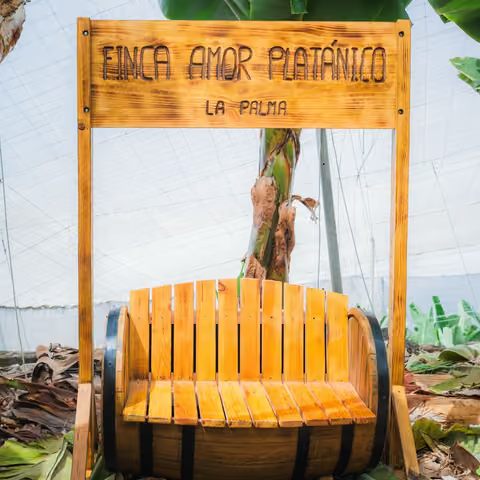
by Sara Belén Santana, Co-founder of Finca Amor Platánico
Published on · Updated on
What Los Llanos is and why it matters
It is the town of the valley: where the whole west of the island comes to do the shopping, go to the bank or see the doctor. It is not a picture-postcard tourist village, and that works in its favour.
It is ten minutes by car from Tazacorte, so if you are staying around here you will pass through it anyway. It is worth giving it a whole morning rather than driving across it.
The museum that is on the street
The most striking thing about Los Llanos is a town council project that began around the year 2000, called The City in the Museum. Instead of putting the art inside a building, they hung it on the façades.
They are paintings on panels, ranging from 13 to 140 square metres. There are more than thirty spread across the old town, and the artists include Javier Mariscal, Boa Mistura and Okuda San Miguel.
There is no obvious marked route, and that is the charm: you come across the pieces as you wander. If you would rather not miss any, the municipal tourist office will tell you where each one is.
In the Las Manchas district, the Plaza de La Glorieta was designed by the Palmero artist Luis Morera. A different thing, but the same idea: art woven into the life of the town.
Plaza de España
It is the heart of the old town and where everyone ends up sitting. What makes it distinctive are the trees: eleven Indian laurels which, along with royal palms, were brought from Cuba by emigrants in the mid-nineteenth century.
That single fact tells half the story of these islands. People left for the Americas, came back, and brought with them what they had seen there.
The kiosk on the square has held its municipal licence since 1951. It is still going.
A step away is Plaza Elías Santos Abreu, which everyone calls the Plaza Chica, with its stone fountain.
The church of Nuestra Señora de los Remedios
It stands on the square itself and dates from the sixteenth century. Inside it holds the town’s patron saint and two pieces worth the stop: a Flemish panel of the Virgin and a Christ of Health made from maize paste by Mexican Tarascan craftsmen.
The maize paste is not a minor detail: it is a technique that arrived from Mexico, and it speaks of how closely this island was tied to the Americas for centuries.
Beyond the centre
The Benahoarita Archaeological Museum covers how the Benahoaritas, the island’s inhabitants before the conquest, lived. It is laid out so it makes sense, children included.
The historic quarter of El Llano de Argual, with the chapel of San Pedro Apóstol and several manor houses, is the genuinely old part of the municipality and is usually empty of visitors.
And the Parque Antonio Gómez Felipe, an urban garden with sculptures, for sitting a while in the shade.
Planning the morning
A good two hours covers the old town: square, church, murals at your own pace and a coffee at the kiosk. Add the Benahoarita Museum and you are into half a morning.
What works well is combining it with the valley: Los Llanos in the morning, lunch, and down to Tazacorte in the afternoon. Ten minutes between the two.
If you would rather do it the other way round, our afternoon visit starts at 13:30 and leaves your morning free to walk around here.
Worth knowing
It is a real town, not a set: shops close at midday and Sundays are quiet. If you have come for the murals it makes no difference, but if you plan to buy anything, come in the morning.
Parking in the centre is awkward. There are paid zones and they fill up during shopping hours; it is easier to leave the car a little out and walk.
And do not rush. The murals are best enjoyed walking without looking at your phone, turning corners and glancing up.
If you are planning the whole trip, it is all in the guide to what to see and do in La Palma.
Details of the old town come from the official listing at visitlapalma.es and from the Los Llanos de Aridane town council. Both checked on 11 October 2026. For the exact location of the murals, ask at the municipal tourist office.