
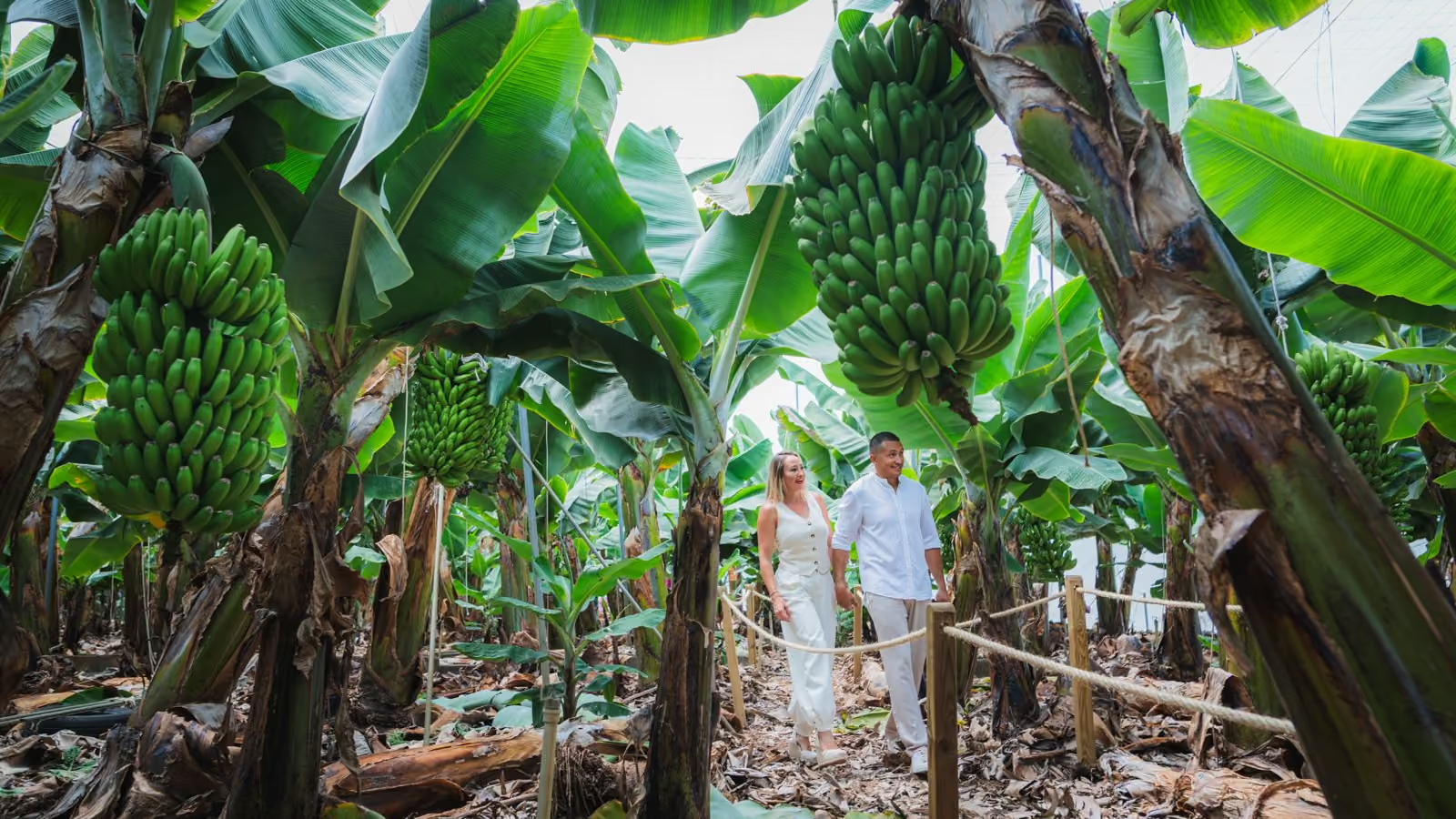
Visiting a banana farm in La Palma
La Palma has lived off bananas for generations. This is what a visit to a working farm is like, and why it is worth the detour.
by José Daniel Martín, Banana grower and co-founder of Finca Amor Platánico
Published on · Updated on
Why visit a banana farm?
Anyone travelling around La Palma sees them everywhere: those dense green blocks running from the hillsides down to the sea. They are not scenery, they are the farming the west of the island lives on. But from the road you barely see any of it.
Seeing a farm from the inside changes how you look at the island. You understand why the terraces are shaped the way they are, why there are water pipes everywhere, and why a single bunch means months of work.
What makes the Canary banana different
The Plátano de Canarias carries a Protected Geographical Indication (PGI). It stays on the plant to the very end, filling out under the island sun, and is cut while still green so it reaches the market in good condition: ripening is finished afterwards, in a ripening room. Hence the smaller fruit, the freckled skin and that sweeter, more intense flavour.
A banana plant takes around nine months to fruit, and fruits only once. It is then cut down, and an offshoot of the same plant carries on in its place. That cycle is exactly what you see as you walk the farm.
What to expect on the visit
At our farm in Tazacorte the visit lasts 2 h 30 min and runs in small groups. This is the route:
- A walk among the banana plants along a prepared path
- The explanation of the crop: how it grows, how it is watered, how it is cut, and the work behind it
- The history and tradition of the banana on the island
- A tasting of local produce, sitting at a table inside the crop
- Time for photographs and a rest area in the middle of the green
The explanation is given in Spanish and English; in German you can follow the whole visit with a QR code.
What it costs
€45 adults, €35 Canary Islands residents, €30 for ages 12 to 15, €20 for ages 4 to 11 and free up to age 3. Everything is included in the price, the tasting too.
An example: 2 adults and 2 children aged 8 and 14 come to €140 in total. The full detail is on the Amor Platánico visit page.
When to go and what to combine it with
The crop works all year, so the visit does not depend on the season and holds up well in the quiet months. The Aridane valley is also among the sunniest parts of the island.
The farm is in Tazacorte, minutes from the municipal Banana Museum and the port with its black sand beach. The full one-day itinerary is in What to see and do in Tazacorte in one day.
Practical tips
- Comfortable closed shoes: the ground is soil and fallen leaves
- In summer, a cap or hat and water
- Free parking by the entrance and a fully surfaced road up to the farm
- Write ahead: groups are small and places are limited
Dates and booking: Book.
If you are planning the whole trip, it is all in the guide to what to see and do in La Palma.