
Things to do in Tazacorte: 15 plans and a full day
We live and work here, so this is not a list copied from another website. These are the places we send our visitors to, with the real timings each one takes.
by Sara Belén Santana, Co-founder of Finca Amor Platánico
Published on · Updated on
First things first: Tazacorte is two towns
This catches out nearly everyone. Tazacorte is not one place but two, five minutes apart by car and almost two hundred metres apart in altitude.
Up the hill is the Villa: the old town, with the church of San Miguel Arcángel, the grand old houses and the narrow streets. Down at the mouth of the ravine is the Puerto: the black beach, the boats and the fish restaurants.
When somebody says "see you in Tazacorte", ask which one. I mean it.
The day we actually recommend
If you only have one day, this order works well and does not force you to rush. We have tuned it over the years, listening to the people who come through the farm.
10:00 — The Banana Museum
It opens at ten, costs two euros and sits on Calle Adalid, next to the Hacienda de Abajo. In a good half hour you understand why this whole valley is covered in banana plants. The detail is in the guide to the Banana Museum in Tazacorte.
11:00 — A walk around the Villa
Step out of the museum and you have the Hacienda de Abajo, the Casa Massieu and the Casa Monteverde, also known as the House of the Martyrs. And the Lavaderos, the old washing place, one of those spots that never make the guidebooks and tell you more about the town than any monument. Half an hour at a gentle pace.
11:30 — A working banana farm
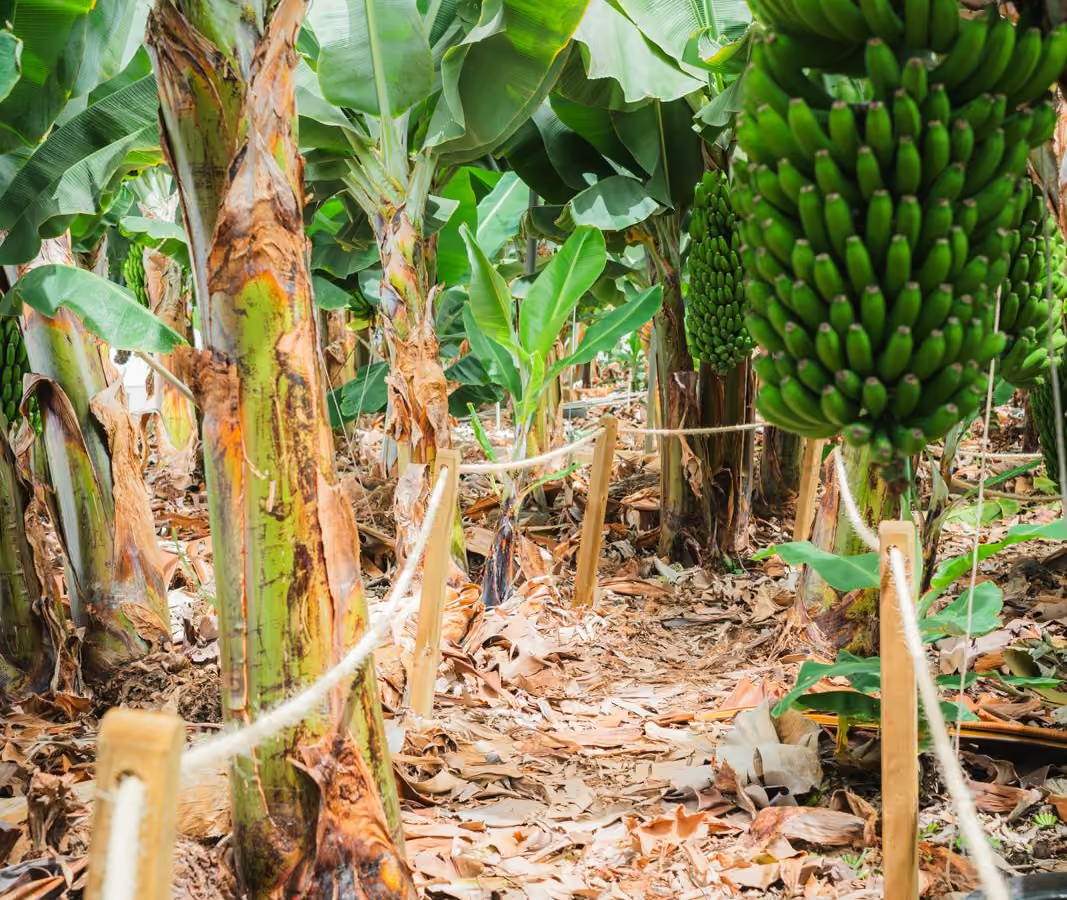
This is our job, so let us be straight about it: we are hardly impartial. But the reason we started opening the farm is that people arrived in the valley, saw banana plants everywhere and left knowing nothing about them. The visit runs 2 h 30 min and ends with a tasting, sitting at the table.
14:00 — Down to the Puerto for lunch
Fresh fish right by the beach. Around there you have the Taberna del Puerto, the Bodeguita del Italiano and the Casa del Mar. You eat without rushing and without booking, except in August.
16:30 — The beach and the old pier
The Puerto beach holds a Blue Flag and the Ecoplaya mark, and the pier shelters it, so the water is usually calm even when there is swell outside. There are showers, toilets, sun loungers and access for people with reduced mobility.
19:00 — Sunset at the Mirador de Las Hoyas
You head up the LP-213 towards La Bombilla and there is a parking area beside the viewpoint. From there you see the whole Aridane valley, the banana terraces dropping to the sea and, on clear days, the outline of El Hierro on the horizon. It is the best place in the municipality to watch the sun go down.
The fifteen plans, if you are staying longer
The itinerary above covers the essentials of one day. If you have more time, or if you are here in winter when the light is short, this is everything the municipality has to offer.
In the Villa
1. The Banana Museum. Two euros, half an hour, Monday to Saturday. The only one in Europe devoted to this crop.
2. The church of San Miguel Arcángel. The centre of the upper town and the point everything revolves around during the fiestas.
3. Casa Massieu and Casa Monteverde. Canarian manor architecture. The second is also known as the House of the Martyrs.
4. The Lavaderos. Where the town did its washing. Small, everyday, and far more revealing than it sounds.
5. Plaza de Simón Guadalupe, La Vica. For sitting a while and watching the town go by.
At the port and on the water
6. The Puerto de Tazacorte beach. Black volcanic sand, Blue Flag, Ecoplaya mark and calm water thanks to the pier. It is on Avenida del Emigrante.
7. Los Tarajales beach. South of the port, also black sand and considerably quieter. If the main one is packed, this is the answer.
8. Kayaking to the youngest beaches in Spain. The short routes reach the land the volcano created; the long ones head north, to the Cueva Bonita and the Poris de Candelaria.
9. Paddle surfing and snorkelling. The sheltered water by the pier is a good place to try either for the first time.
10. Whale and dolphin watching. Boat trips leave from the port along the west coast, where there is plenty of marine life.
11. Sport fishing or hiring a boat. Half a day on the water seeing the island from the outside, which changes your sense of it completely.
Outdoors
12. The Mirador de Las Hoyas. On the LP-213 towards La Bombilla, with parking. The valley, the banana terraces and the sea in a single look.
13. The Punta Lava lighthouse. Standing on a solidified lava flow, on the Las Hoyas stretch of coast. Nearby is the Mangón beach, which many people call Playa Nueva or del Charcón.
14. The Barranco de las Angustias. The gateway to the Caldera de Taburiente Protected Landscape. Genuinely imposing, and the start of many routes.
15. The historic paths. The PR LP-01 or Camino Real, which linked the east and west of the island, and the GR-131, which starts at sea level and climbs past 2,400 metres.
And a sixteenth that does not fit the list but which we send everyone to: drive up to the Roque de los Muchachos at night. It is one of the clearest skies on the planet and it is a little over an hour from here.
Where to eat
At the port, right by the beach, you have the Taberna del Puerto, the Bodeguita del Italiano and the Casa del Mar. Fish of the day, nothing complicated, and you eat looking at the water.
If you go up to the viewpoint at sunset, around La Bombilla there is the Kiosco Cocomar and a couple of local bars for a drink before heading back.
What you should not leave without trying: papas arrugadas with mojo, Palmero cheese and, in season, anything made with bananas from here. That last one we have covered ourselves, in the tasting.
When to come
There is no bad season here, and that is not a sales line: the climate is steady all year and you can use the Puerto beach in December.
What does change is the light. In winter the sun sets before half past six, so the itinerary above has to be compressed. In summer you have daylight past nine and everything fits without pressure.
August is the busiest month, especially around the fiestas. If you can choose, May, June, September and October are the best months of the year in this valley.
Getting here and getting around
It is about forty minutes by car from Santa Cruz de La Palma. Ten from Los Llanos de Aridane. A little under an hour from the airport.
The honest answer is that you want a car here. There are buses, but the frequencies will not let you string together the day described above. Between the Villa and the Puerto there are five minutes of winding road and a lot of height difference, so walking it is possible but long.
For directions and a map to our farm, see how to get here.
If you are coming with children
The Puerto beach is the safe bet: calm water thanks to the pier, black sand that heats up far less than you would expect, and services close by.
The museum is short, which with children is a virtue. And on the farm the visit is free up to age 3, with an area where they can do their own thing while the adults finish.
Kayaking and paddle surfing work well from a certain age, and the water by the pier is the most protected spot on this coast to give it a go.
If the day turns bad
It does not happen often, but it happens, mostly with calima or when the swell makes the beach unusable. Plan B is the same day without the water: museum, a walk around the Villa, a long lunch at the port and, if it clears, the viewpoint.
The farm visit also works in light rain, because almost all of it happens under the banana leaves, which keep off a good deal more than you would think.
If you are planning the whole trip, it is all in the guide to what to see and do in La Palma.
Details of beaches, viewpoints, places and activities are taken from the official tourism website of Tazacorte town council, turismotazacorte.es, checked on 10 October 2026. The timings and the recommendations are ours, from living here.