
Banana farms you can visit in La Palma
There are three of us and we are different. Here is what each one does, so you can choose properly — even if you do not choose us.
by José Daniel Martín, Banana grower and co-founder of Finca Amor Platánico
Published on · Updated on
Why I am the one writing this
I run one of the three farms, so the obvious move would be to tell you to come to mine and leave it there. But plenty of people who come through have already been to another one, or are about to, and the conversation repeats itself often enough to be worth writing down.
Let me say it up front: I know the others, they are good people and they do serious work. This is not about who is better. It is about these being different plans, and it helps to know which one is closest to what you are after.
PlatanoLógico, in Puerto Naos
It is by far the best known of the three, and deservedly so: they have spent years explaining organic banana growing and they do it very well.
Their visit runs about 90 minutes and revolves around organic cultivation, how the ecosystems inside the farm work, and what it means to live next to a volcano — which over there is not a metaphor. There is a banana tasting and, at the end, tea brewed with solar energy. The meeting point is in Puerto Naos, along the beach promenade next to the Hotel Meliá; they tell you to look for a six-metre banana painted on the wall, and they are not exaggerating.
You book through their website. They keep days, times and prices up to date there, so check it with them rather than trusting anyone else: platanologico.es.
If organic farming is your thing and you want a shorter visit, that is your place.
Amor Platánico, in Tazacorte
Ours. And since I am hardly impartial, I will stick to the facts.
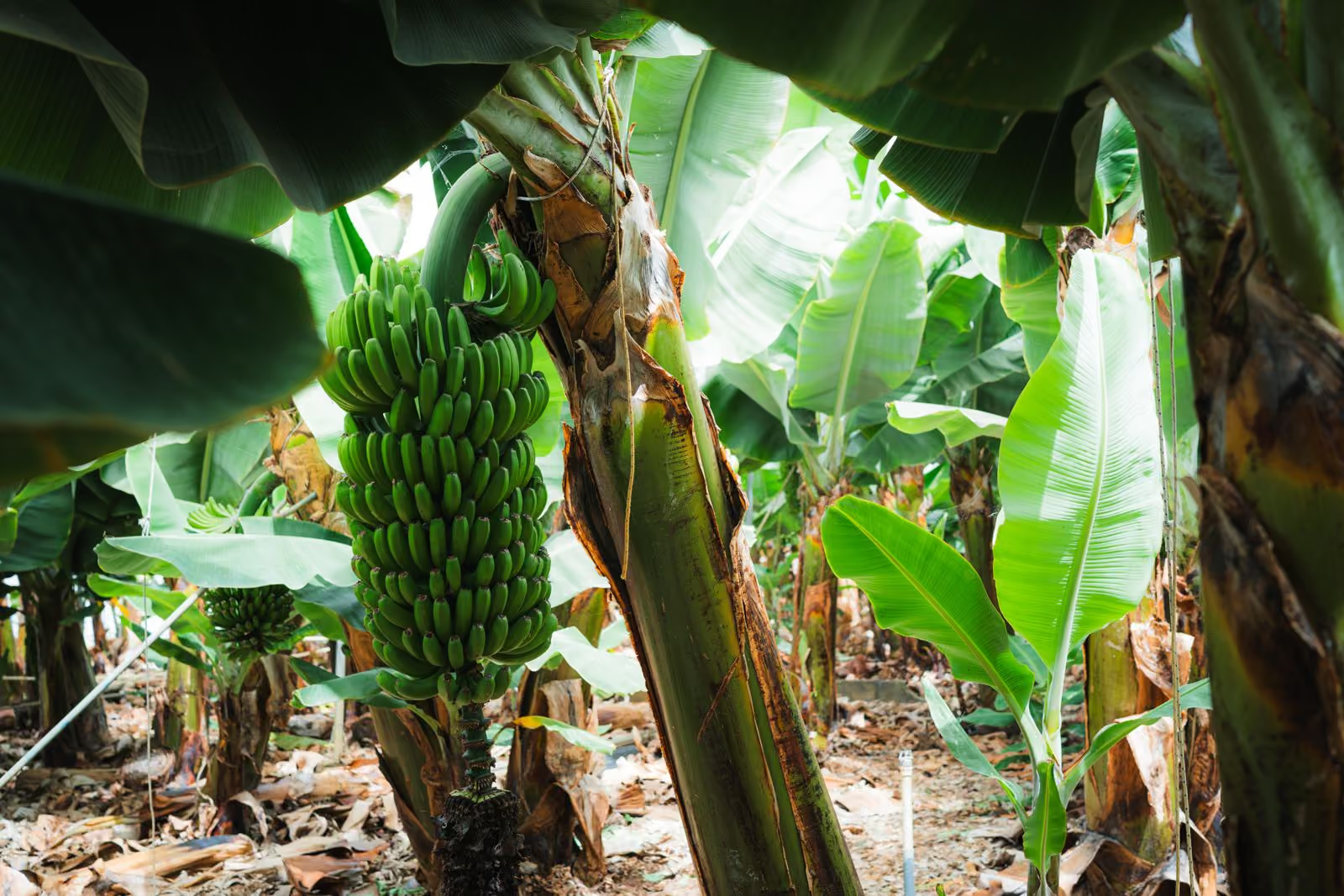
The visit runs 2 h 30 min and well over half of it is spent walking between the plants: how the irrigation works, why you remove the suckers, how long a plant takes to give a bunch, why it is cut green. The rest is a tasting, sitting at the table, with papas arrugadas, mojo, Palmero cheese, pastries and island wine.
Groups are 15 people at most, we run two slots a day — 10:00 to 12:30 and 13:30 to 16:00 — and we close on Mondays. There is space for children to do their own thing and the visit is free up to age 3.
If what you want is time, proper food and coming with children without rushing, we fit well.
Ecofinca Nogales, in Puntallana
This one plays in another league because it is at the other end of the island: Puntallana, in the north-east, next to Santa Cruz de La Palma. If you are staying over that way, do not even think about crossing the island to see us.
It is a family farm where bananas grow alongside avocado, mango, pineapple and coffee, and they keep Palmera cows, a local breed. The visit goes round the farm, they explain how they grow and how they make their own fertiliser, and afterwards you taste whatever is in season, which changes a good deal through the year.
Duration, languages and price vary depending on where you look them up, so here is their website directly: ecofincanogales.com.
If tropical fruit beyond bananas interests you, or you are on the east side of the island, it is the obvious choice.
Which one suits you
It comes down to three things, and none of them is price.
Where you are staying. La Palma looks small on a map and then the roads are what they are. If you are in the Aridane valley, PlatanoLógico and we are within reach. If you are in Santa Cruz or the north, Nogales.
How much time you want to give it. A long hour and a half, or a whole morning with lunch built in. They are different experiences and neither is better.
What actually interests you. If it is the organic model, PlatanoLógico. If it is the produce and the table, us. If it is tropical variety and farming in general, Nogales.
What the three have in common
All three are working farms, not stage sets. That means mud when it has rained, machinery in the way and people getting on with their job while you walk past. To me that is the best part, but it is worth knowing.
All three need booking ahead. None of them works by turning up unannounced, and in high season places go quickly.
And at all three you eat or drink something grown on site, which in the end is what this is about.
What to bring and what not to expect
Closed, comfortable shoes. No flip-flops: there is soil, loose stone and slope.
A hat and water, although a good part of the route runs under the leaves, which give more shade than you would imagine.
And do not expect a museum with screens or a theme park. This is a working farm with people in it. What you take away is an understanding of what this island lives on, not an attraction.
If you only have time for one thing
If you are really pushed and can only make one banana-related stop, and you are in the valley, the Banana Museum in Tazacorte costs two euros and takes half an hour.
It is not the same as setting foot on a farm, but it gives you the historical context, and let us be honest: for some trips that is enough.
If you are planning the whole trip, it is all in the guide to what to see and do in La Palma.
Details of PlatanoLógico and Ecofinca Nogales are taken from their official websites, checked on 10 October 2026. Their times and prices can change, so always confirm with them before you go.