
Canary banana and ordinary banana: the real differences
The freckles are not a flaw and they do not mean the fruit is past its best. They are the signature of something that grew slowly. Let me explain.
by José Daniel Martín, Banana grower and co-founder of Finca Amor Platánico
Published on · Updated on
The question I get most
I have been showing people round the farm for years, and one question always comes up, usually while somebody is holding a banana: "but is this not the same as a normal banana?".
The short answer is no. The long one has to do with the climate of these islands, and with time.
The freckles, the first thing you notice
Plenty of people push them aside in the supermarket because they think the fruit has gone over. It is exactly the other way round.
Those dark spots appear because the fruit grew slowly. In the Canaries the temperatures are mild and the wind arrives damp, so the plant develops far more slowly than in the tropical areas where ordinary bananas are grown. That slow growth stretches out the ripening, and the visible result is brown speckling on the skin.
The official specification for the Protected Geographical Indication lists it as one of the three hallmarks of the fruit, and explains that two enzymes cause it, polyphenol oxidase and peroxidase, which produce the browning.
So if you see freckles, you picked the right one.
Why it tastes sweeter
The PGI specification describes the flavour as "intensely sweet", and puts it down to two things: plenty of sugar and little starch.
That also comes from time. The fruit spends considerably more months on the plant than a tropical banana, and all that while it is building up sugars. By the time it is finally cut, it already holds what the other one lacks.
There is a common mix-up worth clearing up, because I have read it even in travel guides: the Canary banana is cut green, just like any other. What changes is that before that cut it spent far longer filling out on the plant. The ripening is finished afterwards, in a ripening room, so it reaches the market intact.
The aroma has a technical name
I like this part especially. The official specification calls the characteristic smell the "banana impact", and attributes it to two specific compounds: isoamyl acetate and hexyl butanoate.
It is that smell left on your hand after peeling one. You are not imagining it: it is written down in a government document.
And the texture
The specification describes it like this: flesh slightly resistant to the bite, at once soft and smooth, juicy, firm but tender.
In practice, the Canary banana is juicier. The ordinary banana eats drier, with a texture many people describe as floury.
What the PGI actually means
The Plátano de Canarias has held a Protected Geographical Indication since 2013, and it is the only banana in the world with European recognition of this kind.
It is not a marketing sticker. It means there is a written specification with concrete requirements, that the growing happens on the islands, and that somebody checks. Behind it is Asprocan, which brings together the Canary banana growers across several producer organisations.
For those of us who grow it, that mark is what stops fruit from elsewhere being sold as if it came from here.
Telling them apart at the greengrocer
The Canary banana is smaller and more curved, with speckled skin. The ordinary banana is larger, gently curved and uniform, with no spots.
If you have both in front of you and still cannot decide, smell them. The one from here is unmistakable and far more intense.
Seeing it on the plant changes things
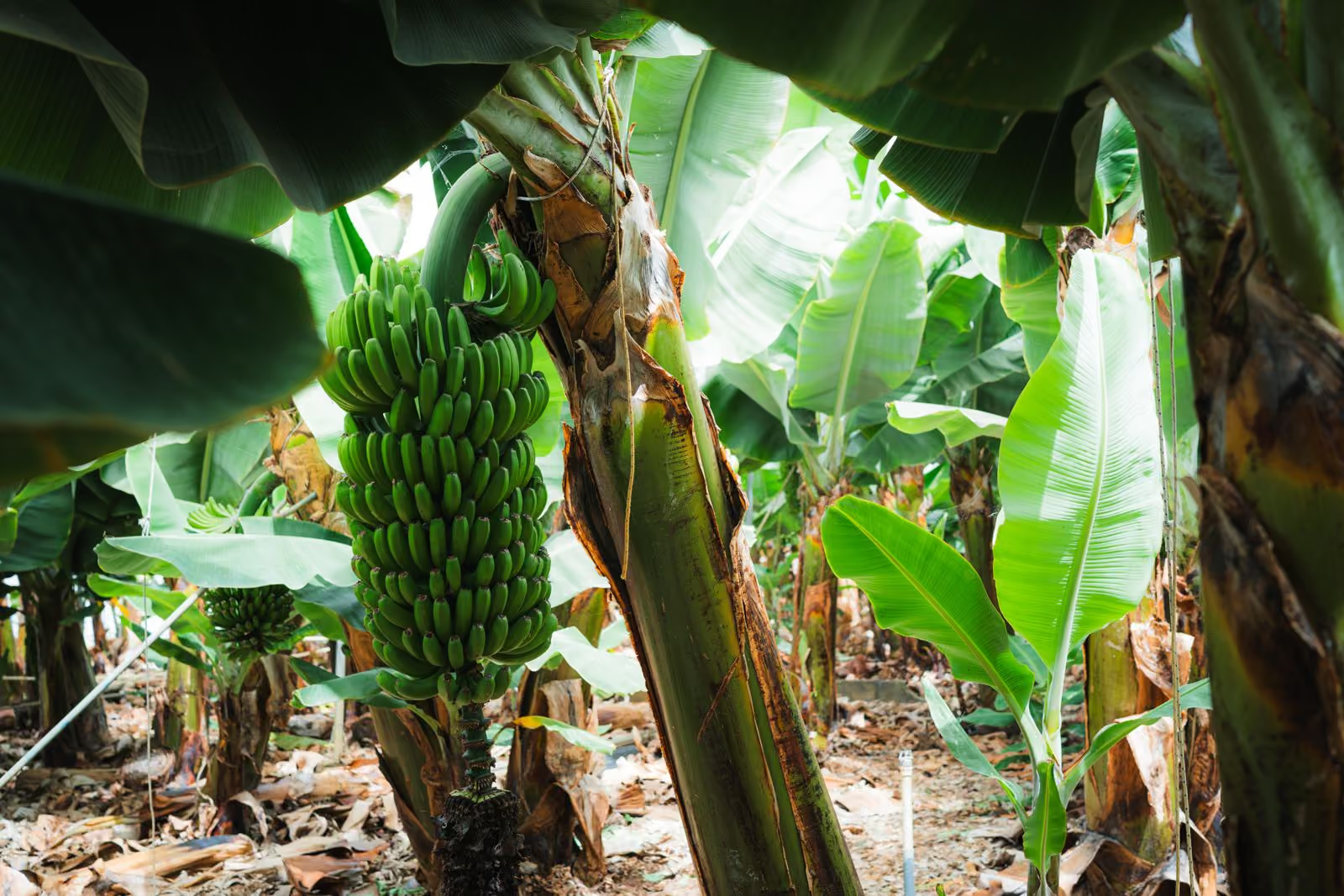
All of this makes much more sense with a plant in front of you. That the banana plant is not a tree but a giant herb. That each one gives a single bunch in its lifetime and is then cut down. That a bunch weighs what it weighs and somebody has to carry it out on their shoulder.
If you are on La Palma, our guided visit goes through all of it unhurried and ends with a tasting of produce from the farm. And if you want to compare options, here are the three farms you can visit on the island.
If you are planning the whole trip, it is all in the guide to what to see and do in La Palma.
The characteristics of flavour, aroma, freckles and texture are taken from the specification for the Protected Geographical Indication «Plátano de Canarias», published by the Spanish Ministry of Agriculture. Checked on 10 October 2026.